Town Planning Terminology / Definitions
Amendment scheme– also known as a Rezoning, is the changing of a certain zoning to another zoning, through a prescribed process.
Annexure– when you use in terms of Town Planning Scheme, it means a document containing the details of the development controls (conditions) of a particular zoning.
Building line– an imaginary line at a specific determined distance from a boundary of a property that demarcates the limits of the placement of a building. Building lines may be relaxed on application and proper motivation. Often determined by the minimum distance between neighbouring structures in terms of the National Building Regulations.
Building Restriction Area– the space between the boundary and a building line, on which no building is allowed. Can also include open spaces.
Business Building– collective terms for buildings used generally for an office, banks, service industry such as hair dressers, repairs, medical and dental rooms, beauty salon, fitness centre, etc, but excludes shops, restaurants, amusement places, schools, filling stations, warehousing, manufacturing, parking garages or vehicle sales.
Business Rights – Property to be used as a business, the rights can be obtained by means of rezoning
Commercial use– contrary to general perception does not mean any “non- residential” use (ie business use). It refers to storage facilities, such as warehousing, distribution centres, wholesales trade, transport deports, laboratories and computer centres. Any light industry, office, cafeteria or residential component must be subservient to the main use.
Conditions of Establishment– document issued by the municipality, following the approval of township, which sets out the conditions under which the township has been approved. It contains inter alia the condition which must be fulfilled prior the proclamation of the township, the conditions that will be incorporated into the proclamation notice, the conditions that will be included into the respective title deeds of resultant erven, as well as the conditions of incorporated into the new zoning scheme.
Consent Use– represents a granting of development rights by the Municipality in Terms of the town Planning Scheme, without changing the formal zoning of the stand. Refer to the specific Town Planning scheme as to which uses can be approved on different zonings. Examples are second dwelling or school or church on Residential zoning. Consent use rights are non-permanent and will lapse if not exercised.
Consolidation of Property – is the process of consolidate 2 or more properties
as one unity.
Floor Area– for the purpose of calculating GFA and FAR the floor total area is the roofed areas of the building including mezzanine floors and basements, external passages and balconies.
IDP– Integrated Development Plan. Policy document by a Municipality in terms of the Municipal Systems Act, which sets out the development vision of the Municipality in terms of physical, financial, institutional, social, political and opening criteria. It serves as a budget tool for the municipality for capita spending on a 5 year revolving programme.
Illegal Township– Any township that was created without the following prescribed procedure as set out in the various legislation. When the township is ruled in an illegal township, the Municipality may not approve any building plans for structure on even in that township while any building word is prohibited.
Land Use Management Scheme– Also known as LUMS. It is the new style town planning schemes established through the Land Use Management Act, set to replace the former control mechanism which were authorised by the different Ordinances.
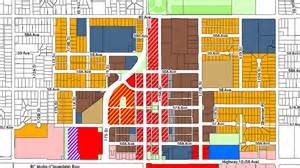
Map 3– Plan forming part of zoning documentation depicting to which a specific zoning applies.
Offices– Means land and buildings used for professional, clerical, administrative, management, marketing and consulting purposes. It excludes any form of retail or a call centre.
Parking Ratio– prescribed number of parking bays to be provided on a site for a specific zoning, often expressed as a number of bays per 100m2 gross leasable area of a building, or in the case of a restaurants or conference centre, a number of bays per centre number of chairs, or room in the case of a hotel or guesthouse.
Rezoning– Also known as an Amendment Scheme, is the changing of a certain zoning to another zoning, through a prescribed process.
SDF– Spatial Development Framework. Policy document of the Municipality draft in terms of the requirements of the Municipal System Act and representing the physical or spatial component of the IPD. This document function similar to the earlier structure Plan, which presented a preferred land use pattern, against which development proposals are adjudicated by the authorities.
Section 82 certificate– Certification by the municipality that all conditions have been met with regards to the establishment of the township, including the proclamation ant the arrangements for the installation of service. This certificate has the effect to transfer of stand being authorised and building plans being accepted for approval. This section number is peculiar to Ordinance 15 of 1986 and will differ from other province’s Ordinances.
Section 101 certificate– Certification by the Municipality that the applicant has fulfilled all pre-proclamations as set out in the conditions of Establishment and that the attorneys may submit the township register documentation to the Deeds Office. This section number is peculiar to Ordinance 15 of 1986 and will differ from other province’s Ordinances.
Section 125 Amendment Scheme– As part of township proclamation process, the new township’s approved zoning are incorporated into the existing Town Planning Scheme in operation. This is contained in the prescribed Maps and Annexures and is gazetted together with the notice of township. This section number is peculiar to Ordinance 15 of 1986 and will differ from other province’s Ordinances.
Service Agreement– Agreement concluded between applicant and Municipality on the responsibilities to provide the internal and external service required for a development, the level of service to be provided, as well as the amount of service contribution payable.
SPLUMA Spatial Planning and Land Use Management Act, 2013– SPLUMA is a framework act for all spatial planning and land use management legislation. It seeks to promote consistency and uniformity in procedures and decision making. Municipalities are solely responsible for processing and dealing with land use applications and the appeals.
Title Restriction– restriction condition contained in the title deed of the property, which may have the effect of a limitation on development. In older townships, prior to Town Planning Schemes, the title deed uses to regulate land uses and many remnants of these still exist to. These include a limitation on subdivision, prescriptions on the use of building lines, the purpose for which the stand may (or may not) be used, etc. title restrictions can be removed with a prescribed process.
Subdivision of Property – is the process of dividing a single property into two or more portions.
Township– Terms used to describe a legal entity that came to being by virtue of a process in terms of specific Ordinance or the DFA, resulting transferrable stands or erven to third parties. By definition a township must consist of two or more erven. Ordinance 15 of 1986 defines a township as being: “any land laid out or divided into or developed as site for residential, business or industrial purposes or similar purpose where such sites are arranged in such a manner as to be intersected or connected by or to abut on any street . “Note that “Street” in this definition can include servitude and may even be only notional in character. The relevance of this definition is that any two buildings located on sites (not even erven) which theoretically can be intersected by road or pathway (even a notional road have the potential of being declared an illegal township.
Township Establishment- legal process whereby an authority receives, considers and approves an application of the township and which culminates in the proclamation of the township.
Proclamation Township– The formal gazetting of the approved township. This even marks the conversion of the status of the property from farmland to a township and from this moment the new zoning are also valid. No transfer of individual stands in the township will be allowed without proclamation.
Township Register– forms part of the township proclamation process, whereby the Registrar of Deeds register the township on his records. This township register is essence the document through which the single title deed of th e original farm portion, is converted and divided into multitude of title (for each erf) from where the first transfer is affected.
Township Board– Review board appointed by the Premier in terms of the Ordinance dealing with appeals and other matters prescribed by the Ordinance. It is constituted of members representing government and civil society; suitable qualified to deal with these matters.
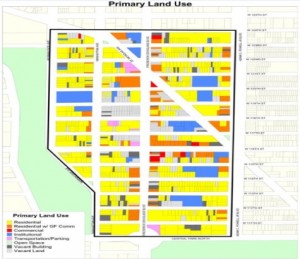
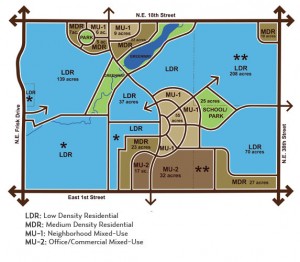
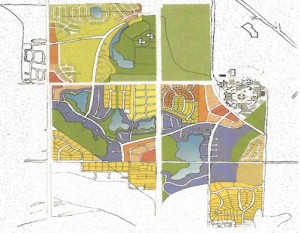
Use Zone– Broad categories of land uses indicating different zonings.
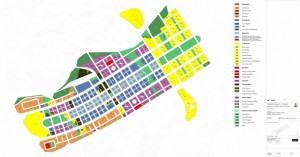
Zoning– land use allocations or right regulating the erection and use of buildings on each property within the Town Planning Scheme area. Zoning is indicated on documentation in the offices of the municipality and consist of Scheme Maps with distinctive colours or monochrome shading, plus Annexures specifying the conditions or limitations (planning controls) imposed on each property.
Zoning Certificate– Document issued by the local municipality on which the zoning of a specific property is set out.